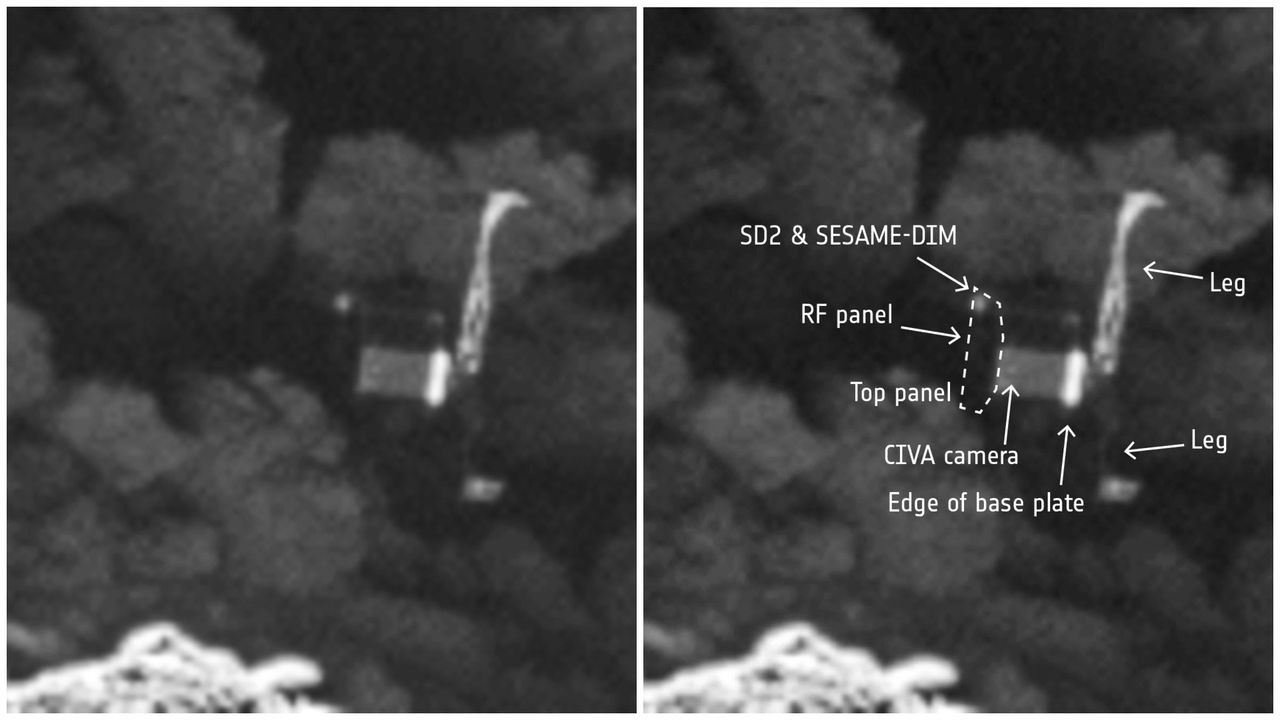
After a two-year exhaustive search, the European Space Agency (ESA) confirmed September 2nd, 2016, as the date when the Rosetta spacecraft definitively discovered the whereabouts of the Philae lander on Comet 67P. The mission’s primary objective was to locate the lander which had unexpectedly rolled off its landing platform during its initial touchdown in November 2014. Scientists utilized data collected by Rosetta’s cameras and sensors to pinpoint Philae’s position within a region near the comet’s base. This discovery marked a significant milestone in planetary science, providing valuable insights into cometary surfaces and the challenges faced by robotic missions exploring these celestial bodies. The successful recovery demonstrated the ingenuity and persistence of the ESA team involved in this complex operation.
Continue reading at www.space.com
This PlaneNews briefing summarizes reporting originally published by www.space.com.
Read the original article →