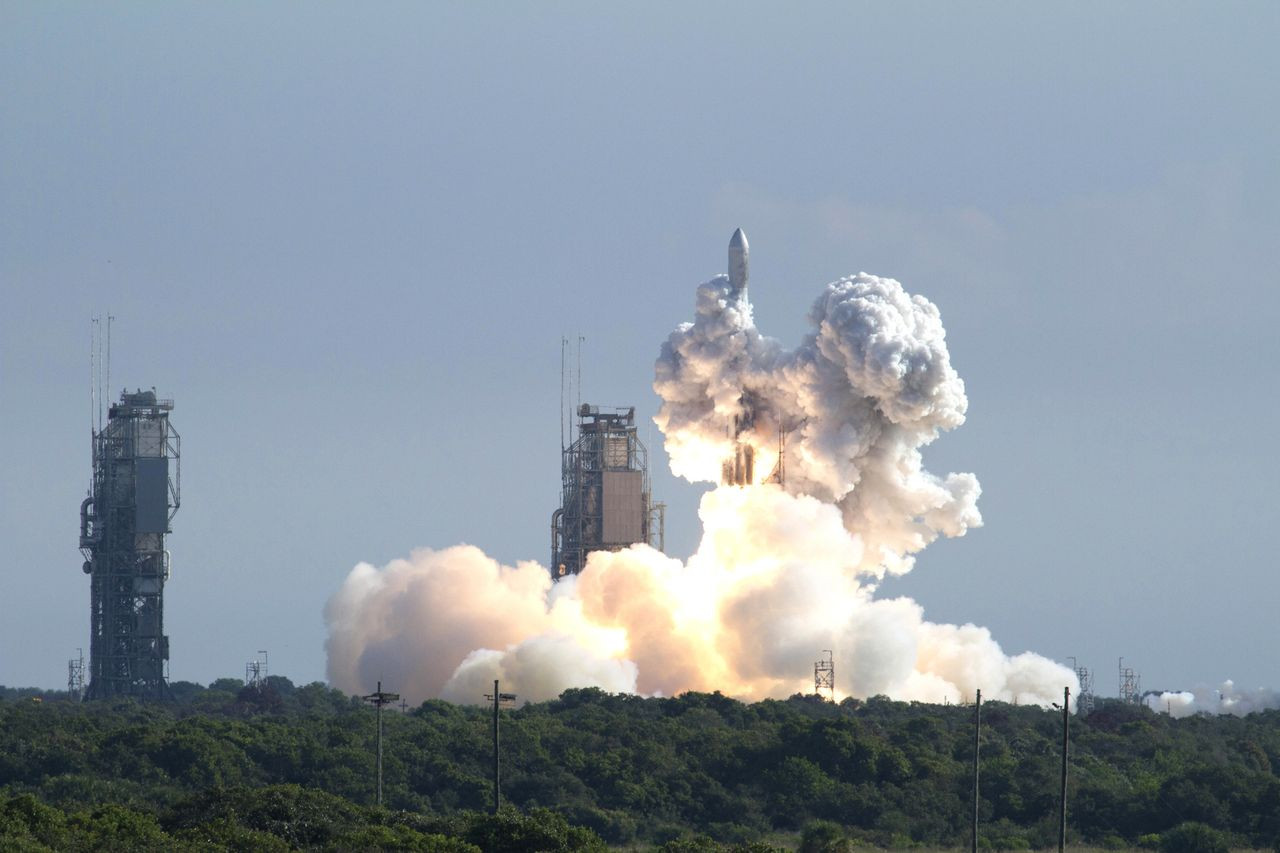
NASA’s GRAIL (Gravity Recovery and Interior Laboratory) spacecraft successfully launched on September 10, 2011, initiating a critical mission focused on detailed mapping of the Moon’s gravitational field. The primary objective was to create a high-resolution topographic map of the Moon by precisely measuring variations in its gravity. This ambitious endeavor utilized two identical spacecraft, GRAIL Alpha and GRAIL Beta, which were deployed from an Earth orbit. Scientists aimed to understand the internal structure of the Moon, including its crust, mantle, and core, through analyzing these gravity measurements. Data collected would significantly improve our understanding of lunar formation and evolution, ultimately contributing to broader knowledge about planetary bodies.
Continue reading at www.space.com
This PlaneNews briefing summarizes reporting originally published by www.space.com.
Read the original article →