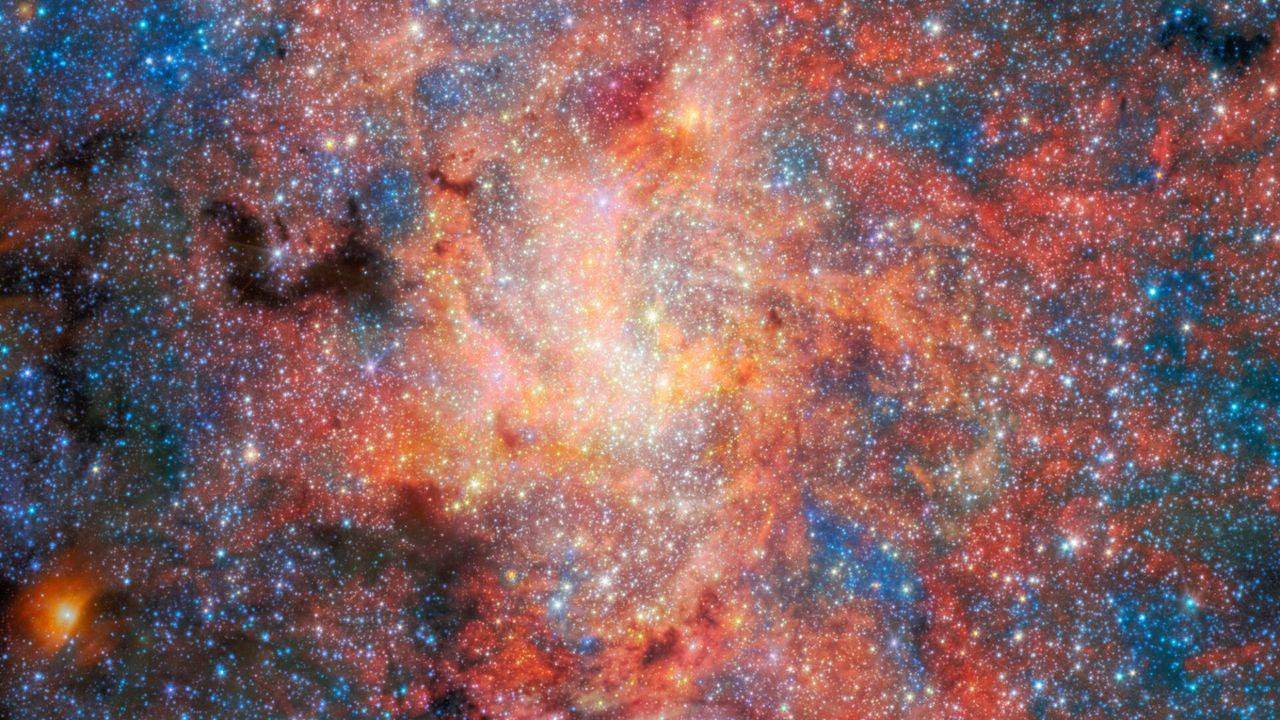
New data obtained by the James Webb Space Telescope indicates that water molecules and cosmic dust are capable of enduring extreme conditions surrounding Sagittarius A*, the supermassive black hole at the center of our galaxy. These findings challenge previous assumptions about the destructive forces present so closely to such an intense gravitational field. Scientists observed water and dust particles surviving remarkably close to the black hole’s event horizon, specifically within a radius of approximately 136 light-years. The research suggests these materials may be more prevalent in galactic centers than previously thought. This discovery has significant implications for understanding star formation and planetary system development around active galactic nuclei.
Continue reading at www.space.com
This PlaneNews briefing summarizes reporting originally published by www.space.com.
Read the original article →