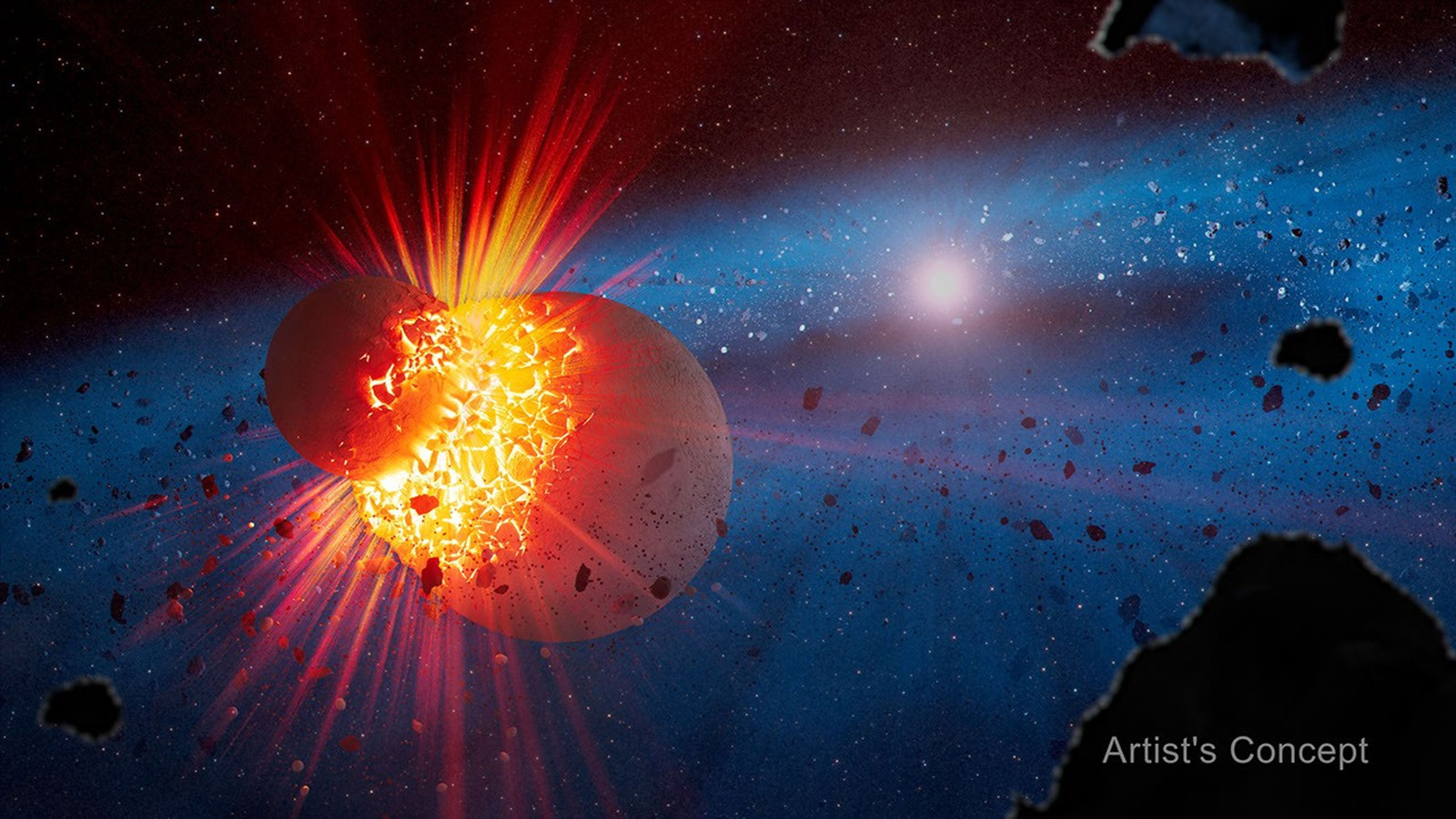
NASA's James Webb Space Telescope has offered crucial new insights into the formation of our planet and its moon. Scientists now believe a Mars-sized celestial body named Theia collided with an embryonic Earth approximately 4.51 billion years ago. This dramatic impact resulted in the ejection of vast quantities of rocky debris into orbit around both planets. Subsequent gravitational interactions caused this ejected material to accumulate, ultimately forming the Moon. The Artemis program at NASA is currently focused on human return missions to the Moon as a stepping stone towards eventual exploration of Mars, building upon this foundational understanding of planetary collisions.
Continue reading at www.nasa.gov
This PlaneNews briefing summarizes reporting originally published by www.nasa.gov.
Read the original article →