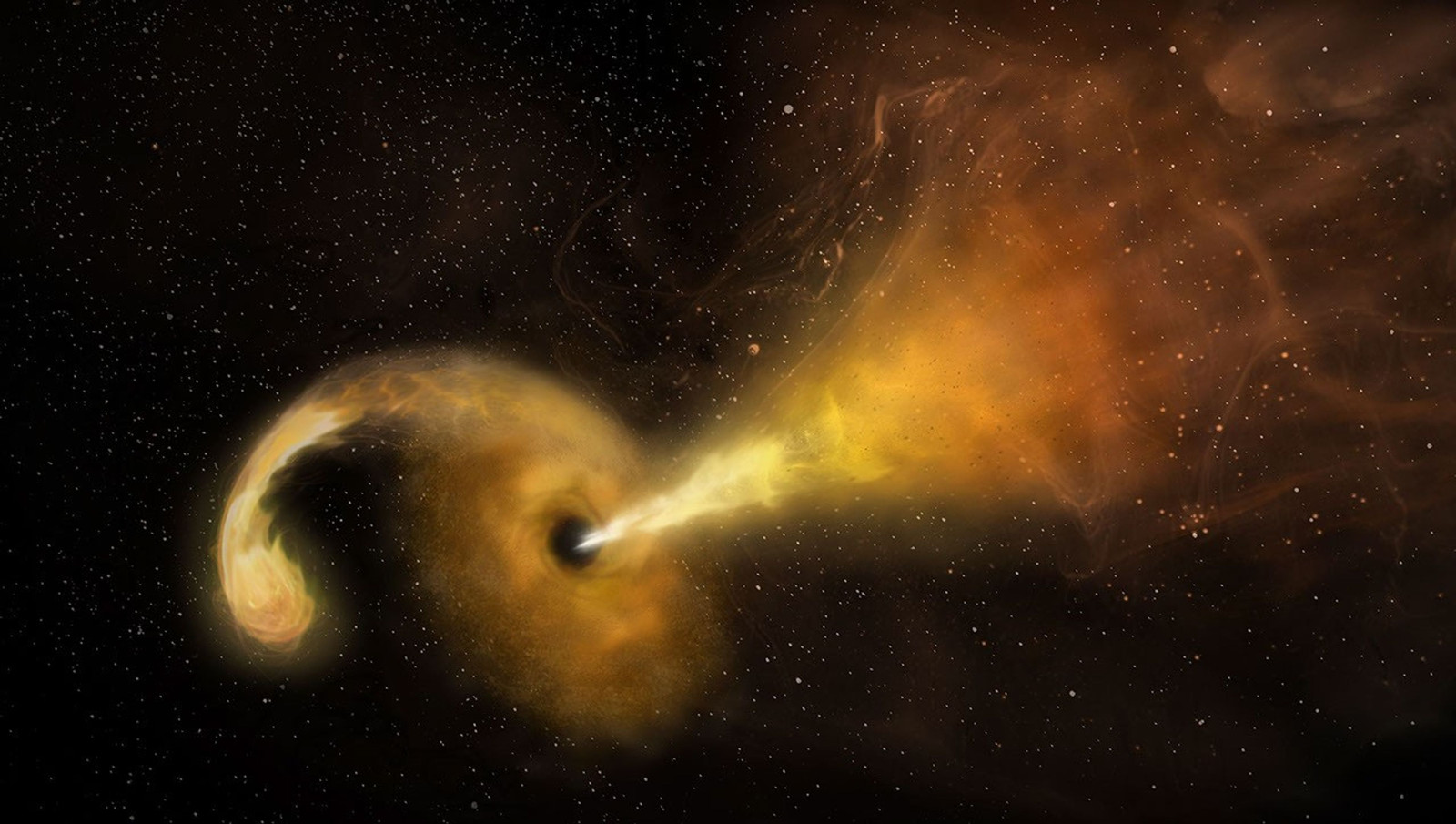
The NASA’s Neil Gehrels Swift Observatory detected a previously unseen event involving a mega black hole consuming a star located in a distant galaxy. The observation occurred at a significant distance from the host galaxy's central core, representing a rarity within such astronomical occurrences. Scientists identified this phenomenon as an ‘orphan’ black hole, meaning it wasn’t associated with a visible galactic nucleus. As the black hole accreted material from the star, intense X-ray emissions illuminated the surrounding space, marking one of the most distant such events ever recorded. This discovery provides valuable insights into the processes governing black hole growth and accretion across vast cosmic distances.
Continue reading at www.nasa.gov
This PlaneNews briefing summarizes reporting originally published by www.nasa.gov.
Read the original article →