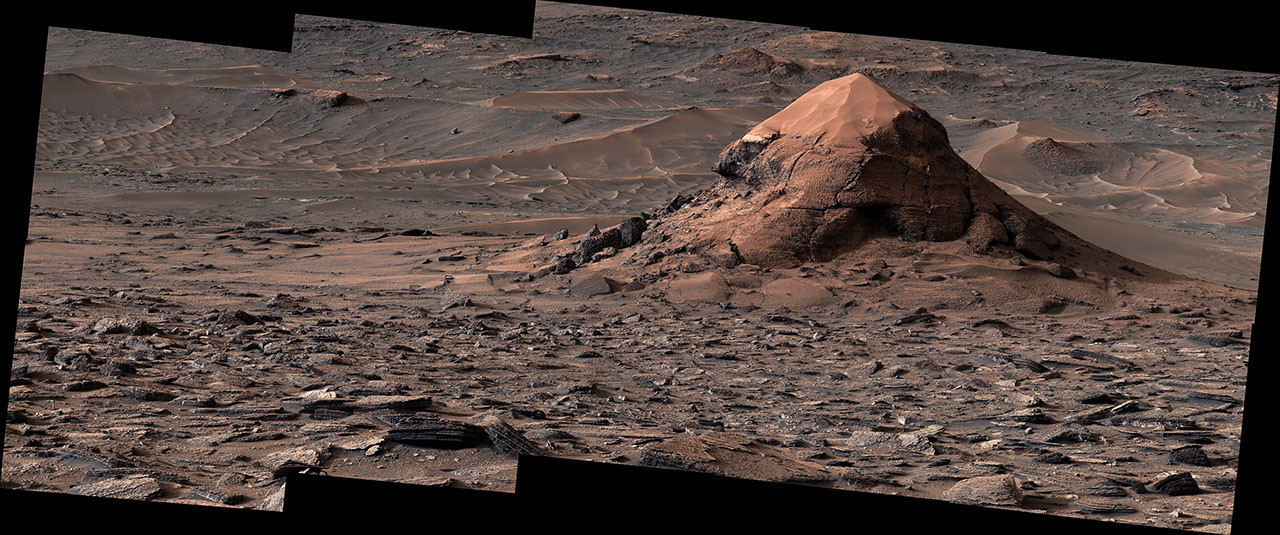
On June 19 and 20, 2026, NASA’s Curiosity rover documented a significant discovery within Gale Crater on Mars: a vast field characterized by numerous surface features known as polygons. This expansive area was observed during the 4,930th and 4,931st Martian days – sols – of the mission's exploration. Scientists have previously identified polygonal formations through Curiosity’s investigations; however, this represents the largest concentration encountered to date. The rover utilized its panoramic camera to capture a complete 360-degree view of the terrain, providing detailed data about these intriguing geological patterns. Researchers are now analyzing the collected imagery to understand the processes that formed these complex shapes and their potential implications for understanding Mars’ past environment.
Continue reading at www.nasa.gov
This PlaneNews briefing summarizes reporting originally published by www.nasa.gov.
Read the original article →