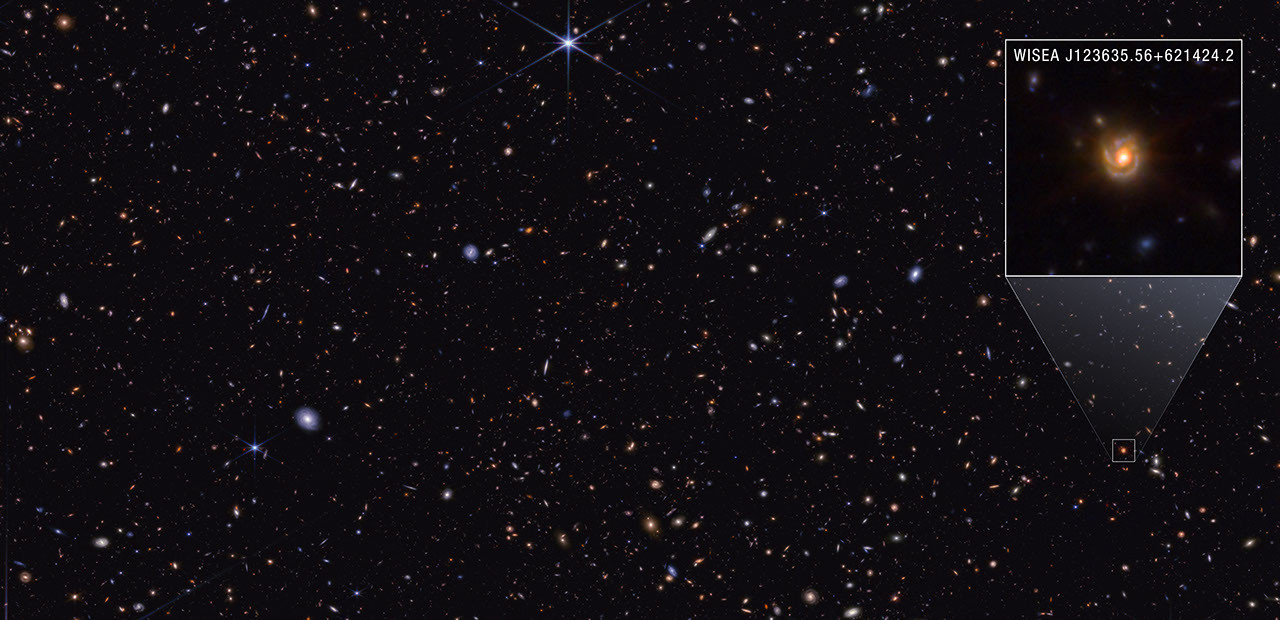
Astronomers remain focused on deciphering the origins of Little Red Dots (LRDs), initially identified by NASA's James Webb Space Telescope in 2022. These exceptionally faint and compact red sources represent some of the most distant objects observed to date. A leading hypothesis suggests LRDs may be actively feeding supermassive black holes. Research indicates that these objects exhibit characteristics consistent with early galaxy formation processes. Scientists continue to analyze data from Webb, hoping to determine whether LRDs represent a significant population of nascent galaxies or an entirely different phenomenon.
Continue reading at www.nasa.gov
This PlaneNews briefing summarizes reporting originally published by www.nasa.gov.
Read the original article →