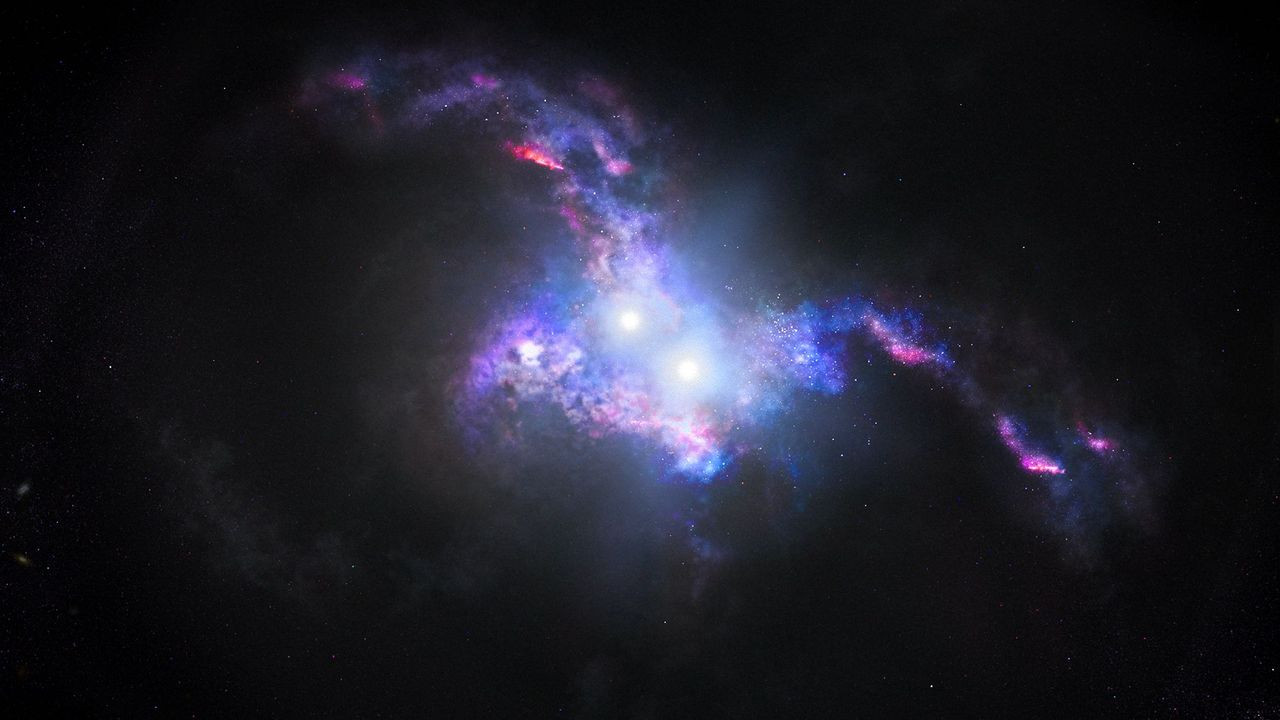
Researchers have identified seven potential quasar gravitational lenses utilizing artificial intelligence, marking a significant advancement in astronomical research. The team employed AI to sift through vast datasets of observations, specifically targeting objects exhibiting extreme magnification effects due to gravity. These ‘quasars’ are believed to be exceptionally distant and bright active galactic nuclei, offering unique opportunities to study supermassive black holes. Scientists hope this discovery will provide crucial insights into how these colossal cosmic entities grow over time. This innovative approach promises to revolutionize our understanding of black hole and galaxy development by allowing for detailed analysis of spacetime distortion.
Continue reading at www.space.com
This PlaneNews briefing summarizes reporting originally published by www.space.com.
Read the original article →