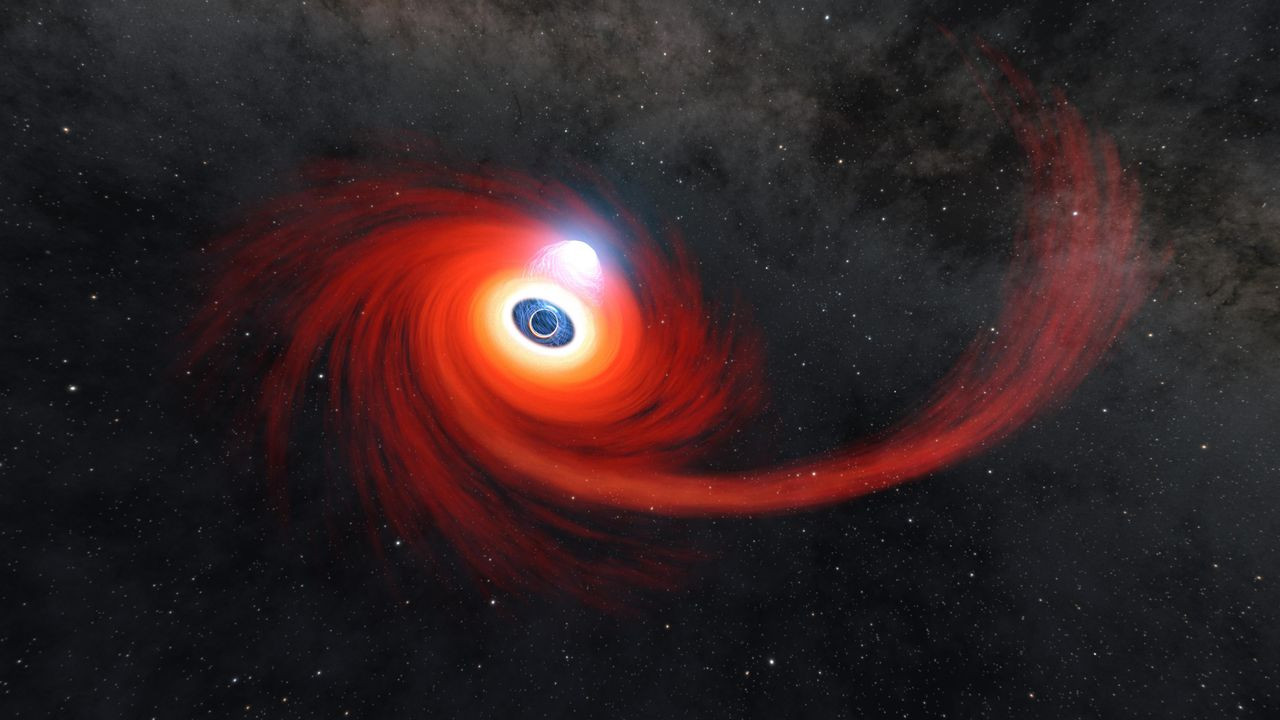
Astronomers have identified what they believe to be the most distant ‘black hole star’ discovered to date, a significant finding with implications for understanding early universe phenomena. This newly observed object, located approximately 300 million light-years away in the constellation Centaurus, exhibits characteristics consistent with theoretical models of black hole stars. The discovery strengthens the hypothesis that these enigmatic “little red dots” – initially detected by the James Webb Space Telescope – are indeed black hole stars. Scientists suggest this distant stellar remnant could provide crucial data regarding the formation and evolution of supermassive black holes shortly after the Big Bang. Further research utilizing the James Webb Space Telescope will focus on analyzing the properties of this black hole star to confirm its nature and refine our knowledge of the earliest epochs of cosmic history.
Continue reading at www.space.com
This PlaneNews briefing summarizes reporting originally published by www.space.com.
Read the original article →