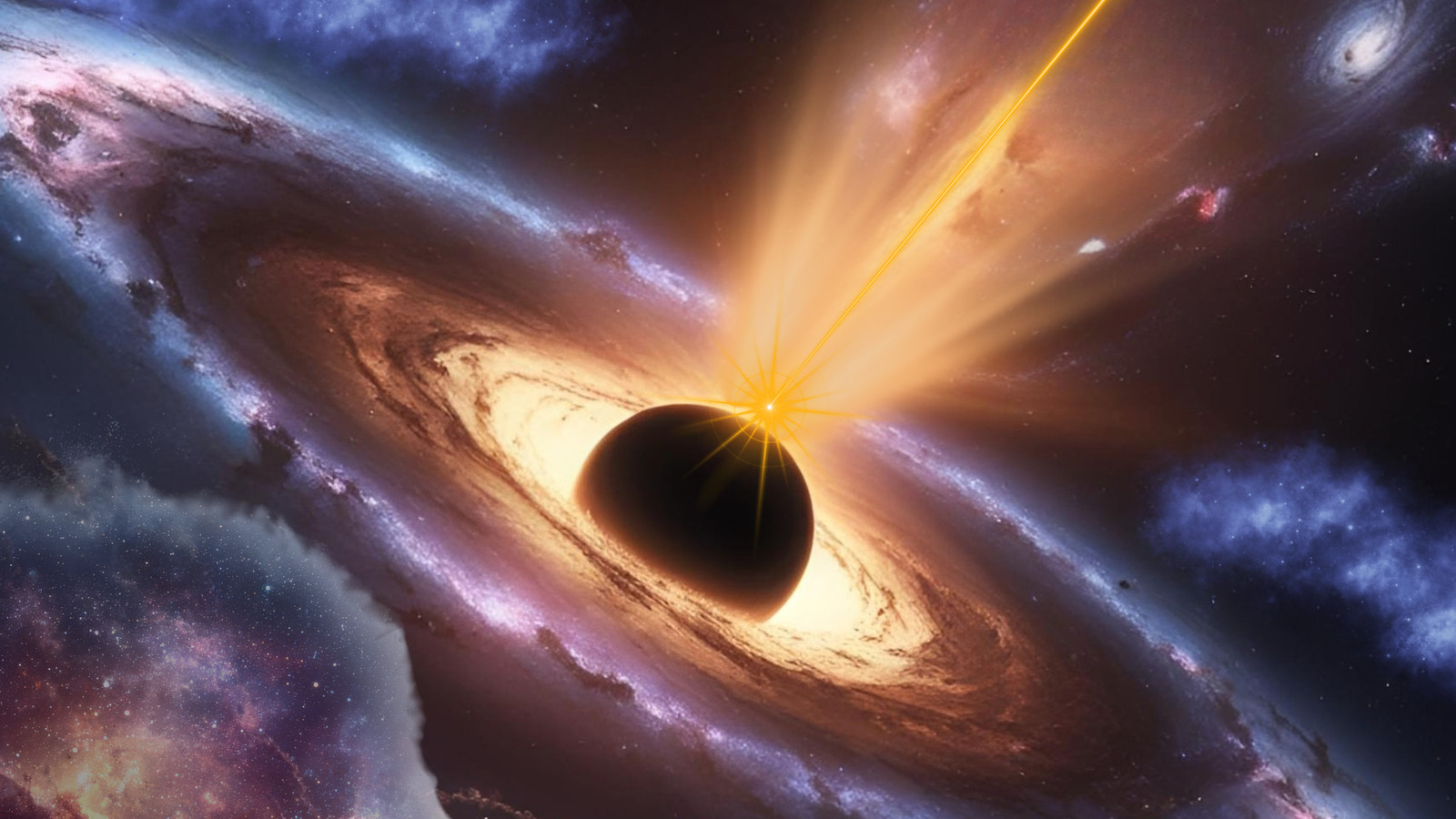
NASA’s Swift spacecraft detected a supermassive black hole actively consuming material approximately 300 days ago. Astronomers witnessed this event as the black hole was engaged in a “heavy cosmic meal,” indicating an accretion process. Following this intense feeding period, the black hole subsequently emitted powerful radio jets. These ‘burps,’ as described by researchers, represent the released energy from the accretion disk surrounding the black hole. The observation provides valuable data on how these extreme objects interact with their environments and generate relativistic plasma.
Original reporting
Continue reading at www.space.com
This PlaneNews briefing summarizes reporting originally published by www.space.com.
Read the original article →