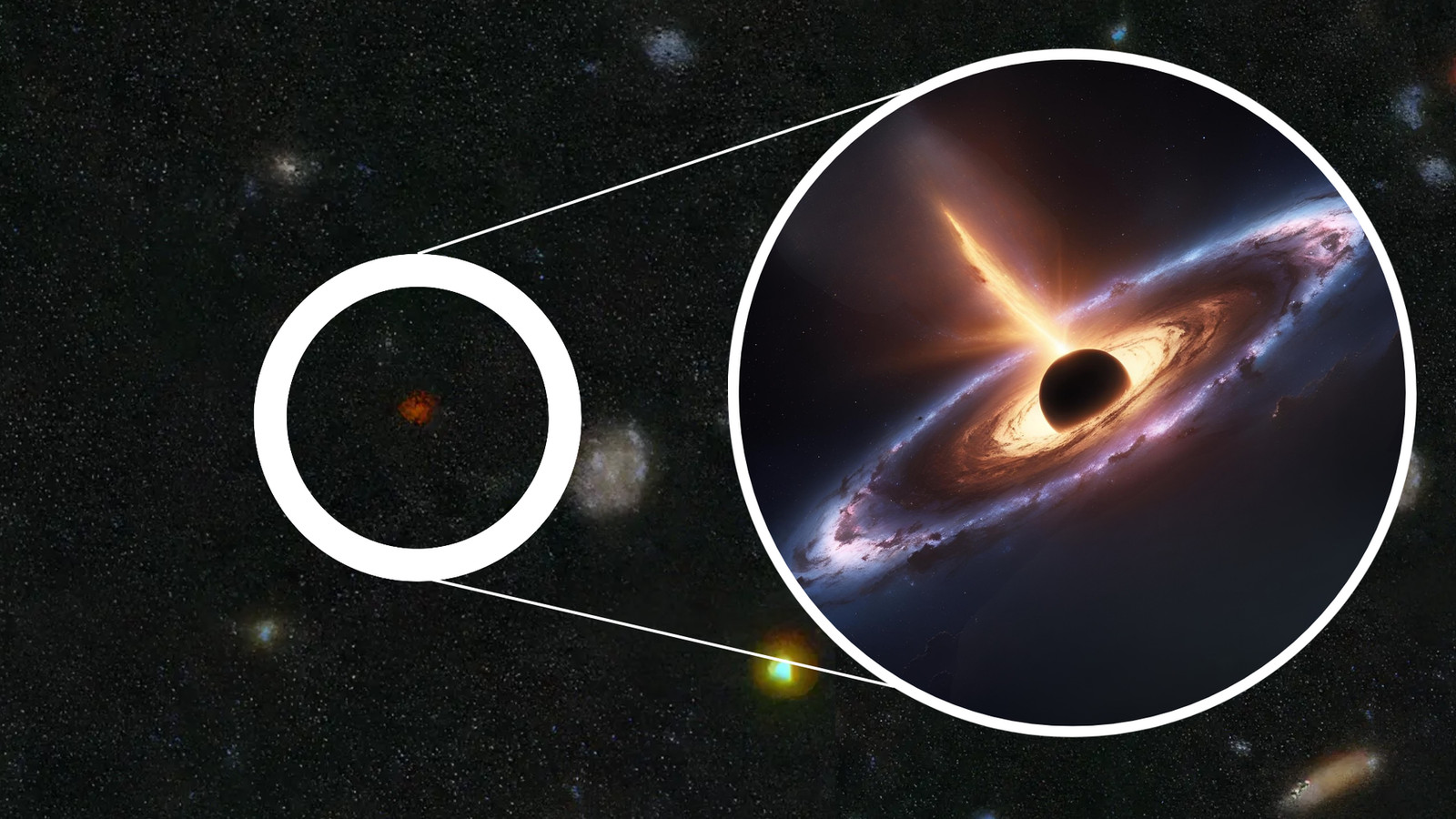
A team of astronomers utilizing data from the Euclid space telescope have identified an unprecedentedly distant and primordial quasar. This newly discovered object represents the earliest known instance of such a phenomenon, offering invaluable insights into the early cosmos. The quasar is characterized as being fueled by a supermassive black hole possessing a staggering mass – approximately 360 million times that of our Sun. Located at a record-breaking distance, this celestial beacon provides scientists with a unique opportunity to study conditions in the universe just hundreds of millions of years after the Big Bang. Researchers believe further analysis will refine our understanding of galaxy formation and evolution during these formative periods.
Continue reading at www.space.com
This PlaneNews briefing summarizes reporting originally published by www.space.com.
Read the original article →