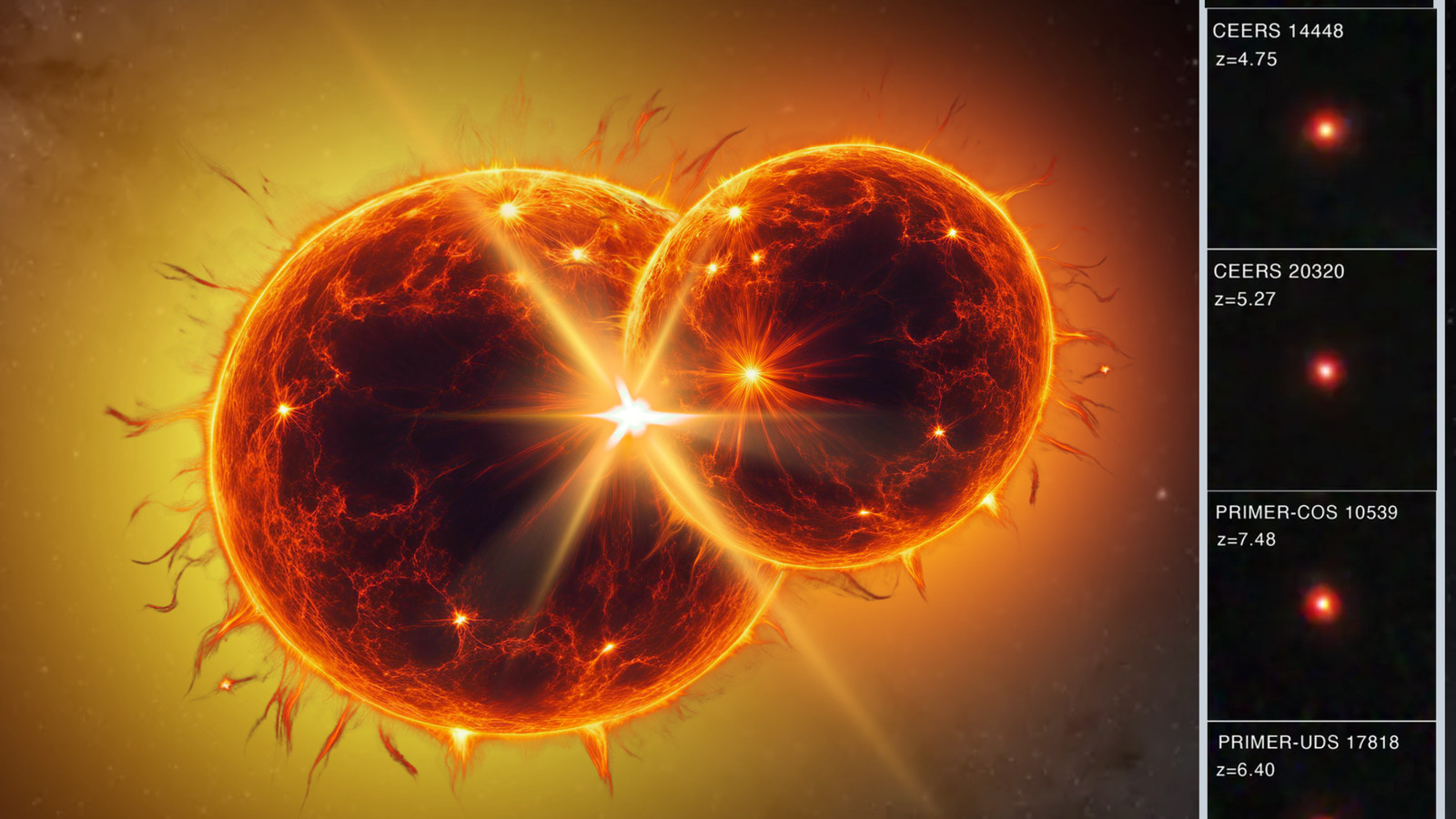
Astronomers are exploring a compelling theory regarding the origins of enigmatic ‘Little Red Dot’ objects observed by the James Webb Space Telescope, suggesting that these phenomena may be linked to ancient stellar collisions. Simulations indicate that frequent interactions between stars during the early stages of the universe facilitated the rapid accretion of matter onto supermassive black holes. These violent encounters would have generated intense gravitational forces, potentially creating conditions conducive to the formation of unusual astronomical structures. The sheer number of star collisions in this period offers an explanation for observations previously considered 'impossible,' such as the existence of extremely massive black holes. Scientists believe further research will refine our understanding of how these events shaped the cosmos.
Continue reading at www.space.com
This PlaneNews briefing summarizes reporting originally published by www.space.com.
Read the original article →